Strengthening Energy Efficiency Governance: A Joint Jordanian-German Effort
Amman, Jordan
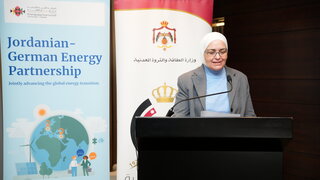
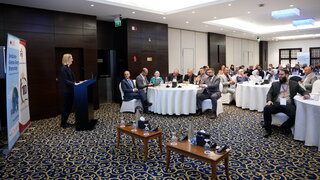
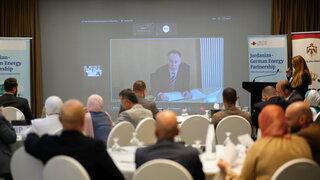
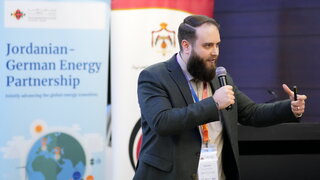
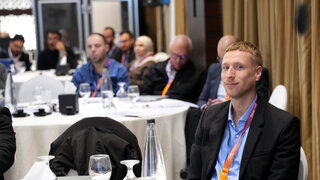
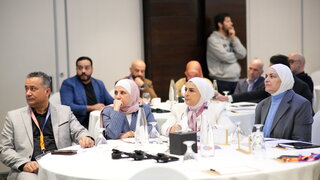
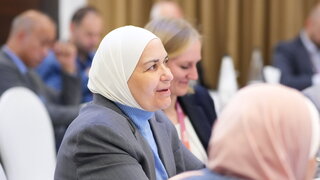
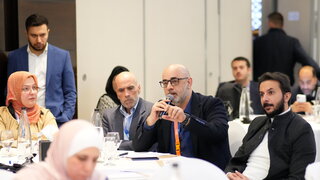
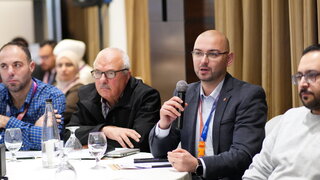
Amman, 02 December 2025 – Jordan and Germany have taken an important step forward in strengthening cooperation on energy efficiency under the Jordanian-German Energy Partnership. At a high-level stakeholder meeting in Amman, organised by the Jordanian Ministry of Energy and Mineral Resources (MEMR) and the German Energy Agency (dena) on behalf of the German Federal Ministry for Economic Affairs and Energy (BMWE), senior representatives from ministries, research institutions, the Delegation of the European Union, and the private sector discussed future governance structures for effective energy efficiency policies and their implementation in Jordan.
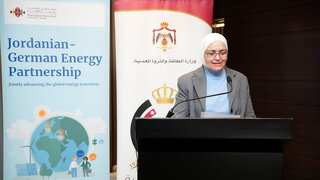
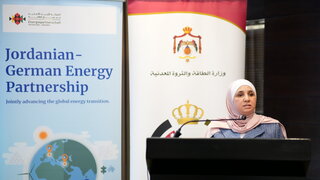
H.E. Eng. Amani Al-Azzam, Secretary General of MEMR, and Mr Ralph Böhme, Director General for External Economic Policy at BMWE, opened the meeting by emphasising the crucial role of energy efficiency in shaping a resilient energy future and the strong, long-standing partnership between both countries.
Over the past two years, the Working Group on Energy Efficiency of the Jordanian-German Energy Partnership has been working intensively on several topics regarding the framework conditions for strengthening energy efficiency governance in Jordan. As part of this effort, a detailed energy efficiency governance concept and a foundational energy efficiency policy document were prepared.
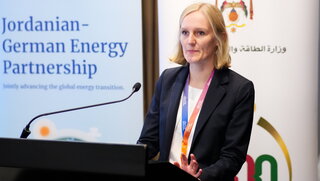
After the introductory agenda overview, Eng. Lina Al-Mobaideen, Director of the Directorate for Energy Efficiency and Climate Protection and Co-Leader of the Working Group, and Eng. Kim Lakeit, Head of the Department for International Cooperation at dena, highlighted the strategic orientation of the importance of stakeholder engagement to create an inclusive and effective energy efficiency governance.
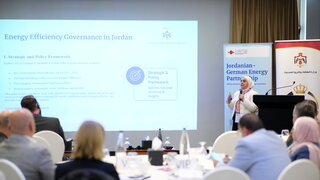
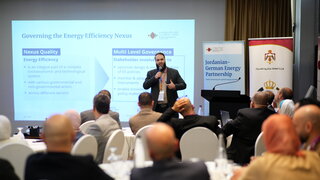
In his presentation, the German co-leader of the working group, Mr Deniz Öztürk (dena), presented the German perspective on energy efficiency governance and provided insights into the regulatory framework of energy efficiency at the European and German levels, policy governance, multi-level coordination and best practices. This was followed by a presentation and discussion on the current regulatory framework for energy efficiency and the planned governance structures in Jordan, led by Eng. Lina Al Mobaideen. The focus was particularly on opportunities for more systematic cooperation between ministries and sectoral stakeholders, as well as on integrating the governance concept into the upcoming amendment of the Energy Efficiency By-Law.
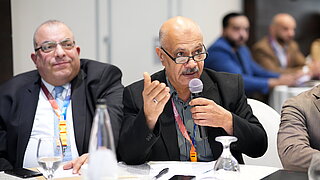
The panel discussion, moderated by Eng. Bushra Al-Abbadi (MEMR), Director of the Planning Directorate at MEMR, offered space to exchange views on stakeholders’ future roles within the proposed governance structure, the importance of inclusive participation, and challenges such as awareness, resource demands, the monitoring and implementation of energy efficiency measures, and inter-institutional coordination. Stakeholders also discussed how financial instruments, sectoral perspectives, and climate-related objectives could be more effectively aligned.
In the afternoon, the scoping session on energy efficiency policy in Jordan invited participants to reflect on sector-specific challenges, implementation progress, and demands. The discussions reaffirmed that accelerating energy efficiency – whether in buildings, industry, or beyond – requires strong structures that bring stakeholders together across sectors, regions, and borders. Only under such conditions can the full potential of energy savings, climate protection, and economic competitiveness be realised.
The Jordanian-German Energy Partnership will continue its close cooperation on energy efficiency governance and instruments. The joint team is already preparing for the next steps, marking yet another promising chapter in this long-standing and forward-looking collaboration.